
Road to PACK EXPO International
Plastic scoops may look simple, but consistently presenting them to automated packaging equipment requires control over several features of the part.
The scoop needs to be separated from the bulk supply, positioned correctly, maintained in that orientation, and released individually when the downstream process is ready for it.
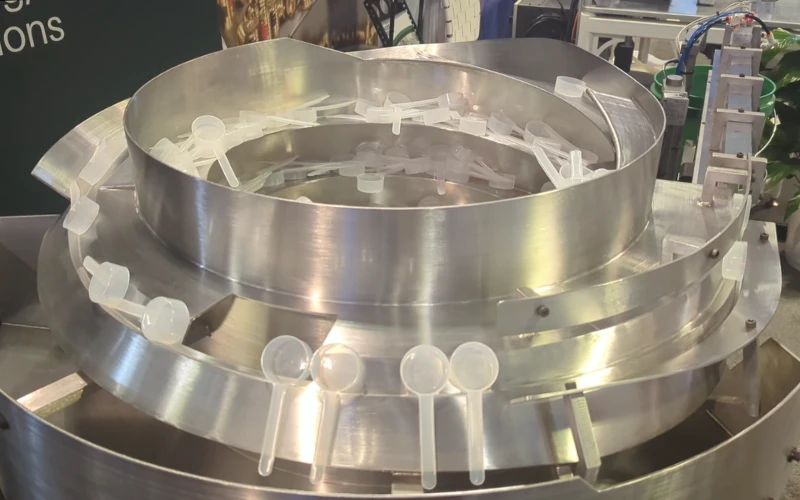
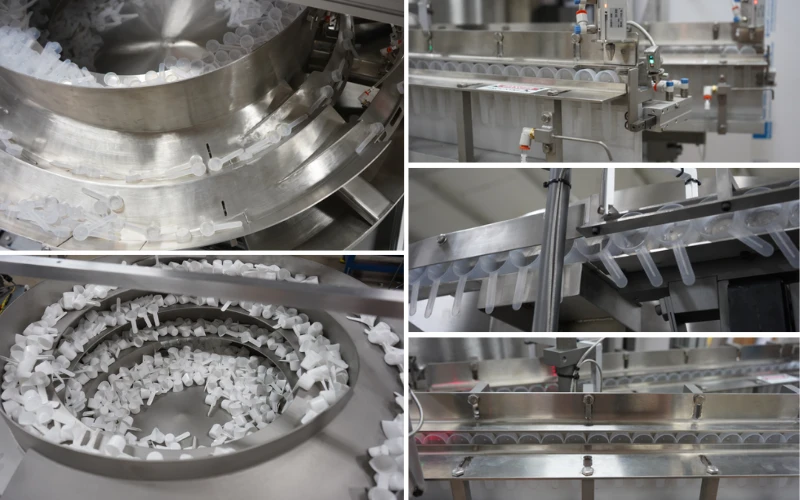
At PACK EXPO International, we’ll demonstrate that process using a plastic scoop feeding system. The vibratory bowl system uses custom tooling to singulate and orient the scoops before an inline track moves them toward a controlled release mechanism for the packaging line. While scoops will be running in our booth, the application demonstrates how vibratory feeding can be engineered around a product’s geometry, required orientation, and downstream process.
Demo at a Glance
- Application: Plastic Scoop Feeding & Orientation
- Technology: Vibratory Feeder Bowl + Part Holdback & Release Escapement
- Industry: Packaging
- Demonstrates:
– Bulk product feeding and singulation
– Custom vibratory bowl tooling
– Multi-feature product orientation
– Metered singular release for downstream packaging - See It Live: PACK EXPO International | Booth N-5143
What Does It Take to Orient a Plastic Scoop?
For this application, simply getting the scoops into a single-file flow isn’t enough. Each scoop needs to leave the feeder in a specific orientation so it can be consistently presented to the downstream packaging process.
The required orientation is:
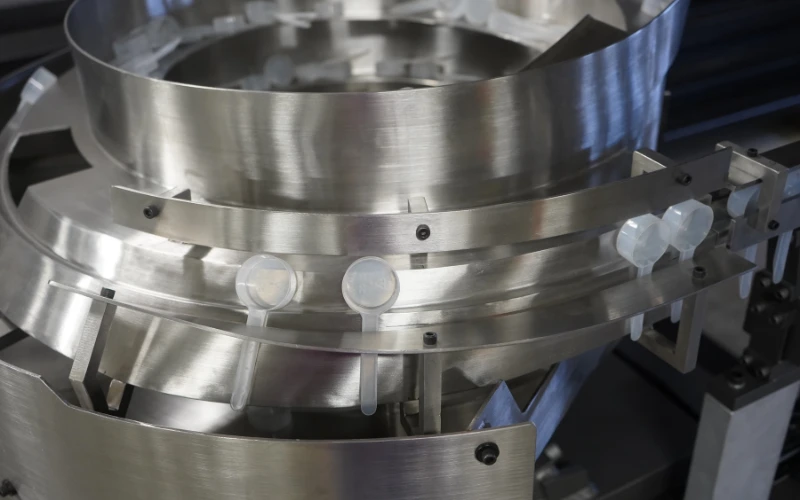
Cup: Up
Opening: Facing outward
Handle/Stem: Down
Tooling within the vibratory feeder bowl is designed around these characteristics. As the scoops move through the bowl, the tooling establishes the required orientation before the parts enter confinement.
Once properly oriented and confined, that position needs to be maintained as each scoop moves toward the downstream release point.
How the Scoop Feeding System Works
For the system running at PACK EXPO, each component performs a specific part of the feeding and orientation process.
Feeding and Singulating Bulk Scoops
Bulk scoops enter the vibratory feeder bowl, where vibration moves the products through the feeding process.
As they travel through the bowl, the scoops are separated from the bulk supply and begin moving individually through the tooling.
Establishing the Required Orientation
Custom tooling within the bowl uses the geometry of the scoop to establish the required position.
For this application, the goal is to consistently present each scoop with the cup up, opening facing outward, and handle or stem down. By the time the scoops reach confinement, the required orientation has already been established.
Engineering Insight
Orientation and release are two separate functions within this application.
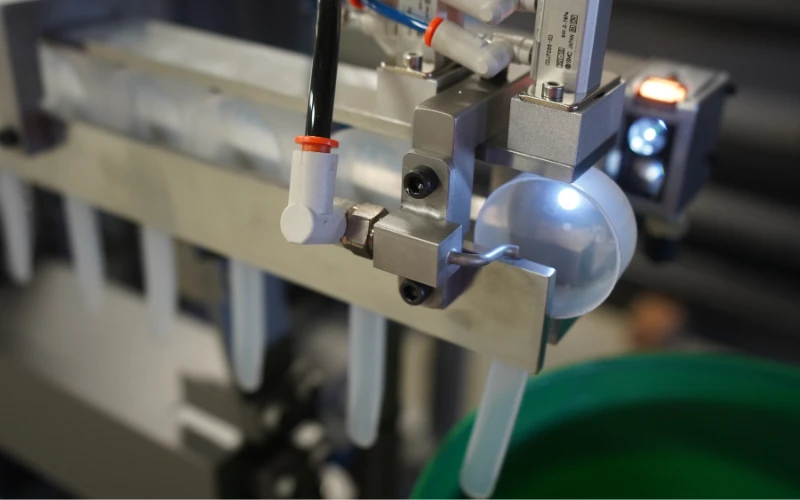
The feeder bowl and its tooling establish the required scoop orientation. Confinement and the inline track maintain and move that orientation forward. The holdback and release escapement then controls when each individual scoop is released to the packaging line.
Maintaining Orientation Through Confinement
Once a scoop is correctly positioned, confinement helps maintain that orientation as it leaves the bowl.
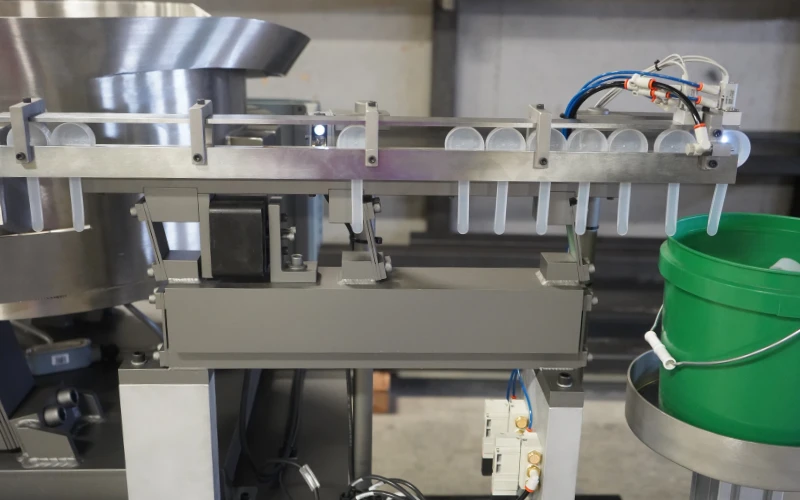
The confined scoops then move onto an inline track, which drives them forward toward the discharge point without changing the orientation established within the feeder bowl.
Controlling the Final Discharge
At the end of the inline track, the scoops enter a finger mechanism that serves as the part holdback and release escapement. Rather than relying on the inline track to determine when each scoop is discharged, the mechanism controls the final release. Individual scoops can then be metered into the downstream packaging line as required by the process.
Bulk Scoops
Singulation
Tooling & Orientation
Confinement
Inline Track
Holdback & Release Escapement
Packaging Line
Built Around the Packaging Application
The product itself is only one consideration when engineering a feeding system. The required orientation and what needs to happen after the product leaves the feeder are also important parts of the application.
For a plastic scoop, that could mean establishing the position needed for the scoop to be inserted into a container, bag, or other package downstream.
The plastic scoop feeding system running at PACK EXPO also features polished construction and fill-and-grind welds, providing a smooth, finished design for sanitary applications where equipment construction and cleanability are important considerations.
The feeder, tooling, track, escapement, and downstream interface can ultimately be engineered around the requirements of the complete packaging process rather than treating feeding as an isolated step.
Beyond This Scoop Application
Plastic scoops are used for measuring and portioning powders, liquids, and granular materials across a variety of industries. Automating their feeding and orientation can support packaging processes where individual scoops need to be consistently presented for the next operation.
Common Applications
Plastic scoop feeding systems may be used in packaging applications such as:
- Pet food bags
- Coffee containers
- Nutraceutical containers
- Food and powdered product packaging
- Pharmaceutical packaging
- Chemical product packaging
- Other applications requiring a plastic measuring scoop to be consistently oriented and released
The specific feeder configuration depends on the scoop and the downstream process. Scoop size and geometry, required orientation, production rate, packaging format, equipment construction, release requirements, and the interface with downstream equipment can all influence system design.
The same principle also extends beyond scoops. Vibratory feeder systems can be tooled around the geometry and orientation requirements of many different parts when consistent presentation is required for downstream automation.
Have a Similar Application?
If your packaging process requires a scoop or another component to be consistently fed and presented to downstream equipment, seeing the complete process can help illustrate what happens between bulk product loading and final discharge.
For this application, that means more than watching scoops move around a bowl. Watch how the tooling establishes orientation, how that position is maintained through confinement and the inline track, and how the escapement mechanism controls the final release.
Those same considerations can help determine the right feeding approach for a different product or packaging process.
See It in Action at PACK EXPO International
At PACK EXPO International, we’ll be running plastic scoops through the complete vibratory feeder bowl system so visitors can see each stage of the process in operation.
Stop by Booth N-5143 to see how bulk scoops are singulated, oriented, confined, moved along the inline track, and individually released for downstream packaging.
More importantly, bring us your own feeding challenge. Our team will be available to discuss your product, required orientation, production goals, packaging process, and downstream equipment to determine what feeding approach could make sense for your application.
By the time you see the system running, you’ll be a little more oriented on what goes into feeding something as seemingly simple as a plastic scoop.
📍 Booth N-5143
🎟 Register FREE with code 15Y01