
How Laning Creates Consistent Flow for Downstream Equipment
In automation, the biggest slowdowns usually come from small things. A few parts bunch up. A sensor misses a read. An arm hesitates because the spacing is off. These little disruptions stack up and reduce overall efficiency.
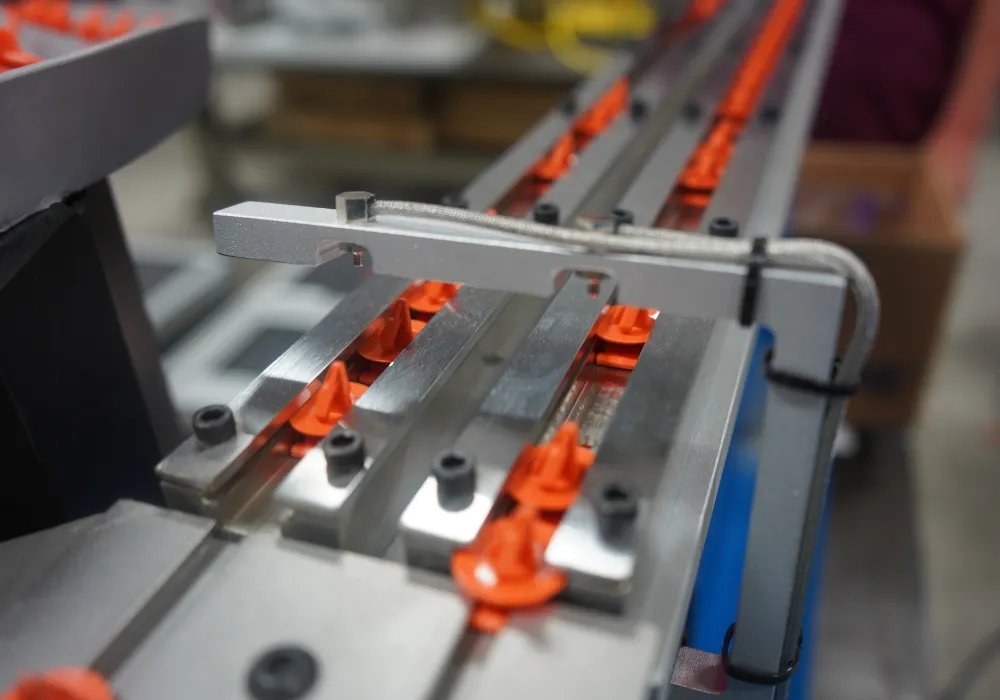
Laning helps eliminate those problems by doing one simple thing well. It organizes parts into evenly spaced lanes and creates a steady, predictable flow that downstream systems can rely on.
Why Spacing Matters
Most equipment on the line is designed to work best when parts arrive in a clean rhythm. Labelers, inspection systems, assembly stations, and pick arms all rely on consistency. When parts come in too close together or in small waves, it can lead to issues like:
- Unwanted part-to-part contact
- Missed inspections or inconsistent reads
- Hesitation in downstream equipment
- Slower cycle times
- Extra operator attention
Laning smooths out that flow. It spreads parts across multiple lanes so each one has the space it needs to move cleanly through the system.
A Cleaner Handoff Means Fewer Headaches
A well designed laning system gives downstream machines exactly what they want. Instead of dealing with bunching or unpredictable spacing, the equipment receives a steady, organized pattern of parts. That leads to:
- Fewer jams and fewer moments of congestion
- More accurate reads for sensors and vision systems
- Better alignment for pick and place equipment
- More predictable and stable production flow
These small improvements add up quickly on a busy line. Operators also benefit from a cleaner layout that needs less hands-on correction.
Solutions for Laning
When multiple lanes stay balanced, the entire process runs more smoothly. Bottlenecks are reduced, and downstream machines can perform at their intended pace. Laning can be created through a variety of solutions including:
The right solution is dependent on the product and requirements. Contact us to discuss your application and let us help select the best solution for you.
A Simple Change That Creates Real Efficiency
Some of the most meaningful improvements in automation come from better flow, not bigger machines. Laning is a great example. By creating space, organizing parts, and delivering a predictable pattern, laning helps the entire process operate with fewer interruptions and better consistency. It is a small adjustment that delivers noticeable wins across the line.